
International shipping company HMM PLATINUM officially announced a joint maritime loss
If you recently delivered goods in Qingdao, Ningbo, or Shenzhen, and were on board a ship called HMM PLATINUM, then please hold on for a moment before reading the following message.
HMM has officially declared a joint maritime loss.
And the shipment you are most concerned about might not have docked at any port yet.
Let's review the timeline: What exactly happened to this ship?
HMM PLATINUM, a Liberian-flagged vessel, with a capacity of 5,593 TEUs, operates on the route of Far East - India - East Coast of South America. Before the accident, it was frantically "stocking up" at Chinese ports: Qingdao, Ningbo, Shenzhen, and one was not left out. The ship was carrying approximately 2,300 containers, and a significant portion of them, which were the hard work of domestic shippers and freight forwarders from production planning, booking, customs declaration, and loading onto the ship, were the fruits of their efforts.
In early October, the ship sailed to the Indian Ocean off Madagascar and southward. Suddenly, the containers on the deck and inside the ship caught fire. Fortunately, 24 crew members were safe. But the fire and high temperatures persisted for a long time, and the ship then began to look for a refuge port: Durban was on the queue, Ngurah Port was applied for, and Gebeha was also discussed. More than a month passed, and the ship was still drifting near South Africa, with the docking time unknown.
While the shippers were still waiting for "when the ship would dock", the joint maritime loss statement from HMM arrived first.
What exactly is a "maritime AA system"?
You can understand the joint maritime loss as a forced, mandatory, and without the option of "withdrawing from the group" in the maritime group-buying.
The ship and the cargo were in the same voyage and encountered a common danger. The captain, in order to save the entire ship, burned fuel, hired tugboats, looked for a refuge port, and hired a rescue company - these expenses, the shipowner would not bear alone. According to the rules, all parties involved in the ship, cargo, and freight, would share the costs in proportion to the value of rescue. The sharing items include but are not limited to: firefighting costs, ship repair costs, refuge port costs, subsequent settlement costs, and cargo damage itself.
And even if your container didn't catch fire, it doesn't mean you don't have to pay. As long as the goods are on the ship and eventually rescued, you enter this sharing pool. In the previous case of the CMA CGM PETRA vessel, the settlement logic was exactly the same: even if the containers were intact, the destination port would not release the goods if the shippers did not provide a joint maritime loss guarantee.
As for the amount of sharing, the industry standards are not unified. Some say it's 1% to 3% of the value of the goods, while others say it's an average of 15% to 40% of the value of the goods. For high-value and large-volume goods, it may even exceed the value of the goods themselves. For this shipment of HMM PLATINUM, it will take the report from the settlement expert Korhi to be released before there will be a figure that satisfies everyone in the short term.
Whether there is insurance or not, in this situation, it's like two different worlds.
This time, the settlement expert designated by HMM was Korhi Average Adjusters & Surveyors, and the joint maritime loss guarantee was collected by Korhi and Richards Hogg Lindley. If the shippers want to take the goods, there are two gates in front of them: the rescue guarantee (because the rescue party SMIT entered the operation according to the Lloyd's Rescue Contract LOF) and the joint maritime loss guarantee. Only after both gates are passed can the goods be moved.
Those who have purchased cargo insurance: Hand over HMM's notice, vessel name, voyage, and bill of lading number to the insurance company, and the guarantee letter is usually issued by the insurer, and the shippers don't have to put a large amount of cash at risk. Although the process is cumbersome, the cash flow is preserved.
Those who haven't purchased cargo insurance: Bear the cash deposit yourself. And note - abandoning the goods is not an exemption from liability. Under the York-Antwerp Rules, the shipowner still has the right to claim the shared expenses. This is probably the most expensive lesson in the 'at that time it was thought that insurance was unnecessary' circle in the foreign trade circle.
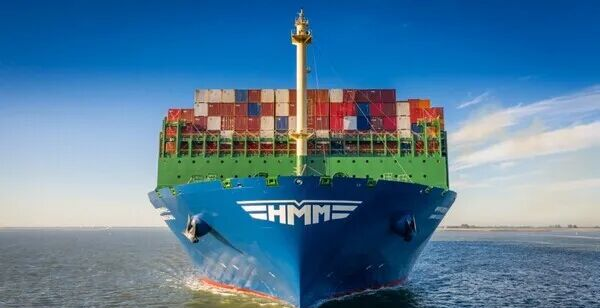
This joint maritime loss issue is essentially a problem of how to distribute risks in this ancient maritime business. It is ruthless, regardless of whether it is your first shipment or not, and it doesn't care if your containers have been burned. The rules are there, once on board, you're in the game.
There aren't many options, but there are still some: check the ship name, voyage number, and container number to confirm if the goods are on the HMM PLATINUM; if insured, report immediately and align the documents; if not insured, prepare patience and materials for a direct communication with the adjuster. The rest, wait for the ship to dock at the port, wait for the adjustment report, and wait for a potentially not-too-small number.
The charm of ocean shipping is its affordability. But the temperament of ocean shipping is that you never know which one will arrive first, the next shipment or an accident. If you happen to have goods with tight deadlines, high value, or those that can't withstand "floating at sea for over a month before docking", Bailyun Network's U.S. air forwarding can be an alternative idea: express service within 4 working days for special routes, standard express within 5 working days, with compensation for delays, and fixed shipping space during peak seasons. At least the timeliness is written in the contract, not in the ocean weather forecast.