
Shipping prices have risen for nine consecutive years, and foreign trade companies say they cannot withstand the weekly increase!
The latest Shanghai Export Container Freight Index (SCFI) was released on June 26th, reporting 3239.64 points, an increase of 117.95 points or 3.8% from last week, achieving the ninth consecutive week of increase and regaining its position at the 3200 point mark. This upward trend began in late April, and the cumulative increase of SCFI has reached 72.73%.
The four major ocean shipping routes in Europe and America have all strengthened - the Far East to Europe route costs about 5766 US dollars for a 40 foot container, the Mediterranean route costs about 6900 US dollars, the US West route has a FEU of about 6067 US dollars, and the US East route has a FEU of about 7384 US dollars. Among them, the European line rose 12.35%, the Mediterranean line rose 12.49%, the Western United States line rose 6.76%, and the Eastern United States line rose 7.43%.
Recently, we have been receiving price adjustment notifications from shipping companies almost every week, "a manager of a foreign trade company told reporters, stating that prices on the US West and US East routes have been continuously rising.
1、 How strong is the increase? Numbers speak for themselves
The increase since the beginning of this year is astonishing. The cumulative market freight rates from Shanghai Port to the West Coast Basic Port have increased by 87%, and the cumulative market freight rates to the East Coast Basic Port have increased by over 70%.
The data from Ningbo Customs is more intuitive: at the end of April, the freight rate for a 40 foot container from Ningbo to a western port in the United States was about $2900, and to an eastern port in the United States was about $3900; By late June, the freight rates for the West Coast route had approached $6300 and the East Coast route had approached $7500.
What is even more headache inducing for foreign trade enterprises is that starting from July 1st, shipping companies will implement a new round of comprehensive rate increase surcharges (GRI), with a proposed increase of about $1500 per FEU for US routes. After the adjustment, the reference freight rates are approximately $7600 for the Southwest Coast, $7800 for the Northwest Coast, and $9100 for the East Coast.
France's Dafei Shipping has announced that starting from July 10th, a peak season surcharge (PSS) will be imposed on goods exported from Asia and the Far East to the United States and Canada, with an additional charge of $4000 for 40 foot containers.
2、 Why are shipping costs skyrocketing as more ships are built?
A puzzling phenomenon is that in the first half of 2026, there were as many as 1165 container ships under construction worldwide, accounting for over one-third of the existing fleet size. According to common sense, the more ships there are, the more excess capacity there is. Freight rates should have fallen, but why have they gone crazy instead?
The problem lies in the gap between "nominal capacity" and "effective capacity".
Black hole one: Red Sea circumnavigation devours effective transport capacity
After the tense situation in the Red Sea at the end of 2023, major shipping companies around the world abandoned the Suez Canal and diverted to the Cape of Good Hope in Africa. The voyage has increased by 30%, with an additional 8 to 10 days for one-way travel. A ship used to be able to run 6 to 8 round trips per year, but now it can only run 4 to 5.
According to Xeneta, a shipping consulting firm, circumnavigating the Cape of Good Hope consumed at least 2.5 million TEUs of effective shipping capacity, accounting for approximately 7% of the global fleet size. After the new ship was launched, a large part of it was forced to fill this "detour pit" as soon as it was put into operation.
Black Hole 2: Rising Costs of Marine Fuel
Due to factors such as the obstruction of passage through the Strait of Hormuz, the cost of marine fuel has skyrocketed by nearly 70%. Shipowners have shifted the cost pressure onto shippers, further pushing up freight rates.
Black Hole Three: Concentrated Release of Multiple Demands
The World Cup and North American holiday consumption cycle are approaching, and e-commerce platforms such as Amazon and TikTok have started stocking up before major promotions. The traditional sea freight peak season, which was originally concentrated from July to September, has been significantly moved forward to June. At the same time, the United States will implement a new round of tariff measures on July 24th, prompting export companies to accelerate their shipment pace, and the "rush to ship" sentiment further strengthens short-term demand concentration.
Wang Guowen, Director of the Institute of Logistics and Supply Chain Management at the China (Shenzhen) Institute of Comprehensive Development, summarized: "The current wave of freight rate increases is a combination of multiple factors, including demand pulses driven by tariff expectations, supply contraction constrained by geopolitical factors, cost side pressures, and fluctuations amplified by agent hoarding, all of which resonate under the rigid constraints of transportation capacity
3、 Foreign trade enterprises: 'Rising every week, I really can't bear it'
The continuous rise in freight rates has made foreign trade enterprises the most directly affected group.
The supply of cabin space is in short supply, and it is very difficult to book temporary cabins. There are frequent problems of cabin bursting and container dumping, and empty container resources are also relatively tight. A freight forwarder practitioner told reporters, "Container shipping is basically in a state of overbooking, and now the space for bulk cargo is also tight
The increase in freight rates has spread to all routes. The Middle East, Red Sea, Europe, South America... are all on the rise. If the goods in the market exceed the capacity, shipping companies will naturally adjust prices, "a staff member of China Merchants Group told reporters. Even traditional routes with stable freight rates such as Japan and the Philippines are under pressure due to the diversion and transfer of some goods.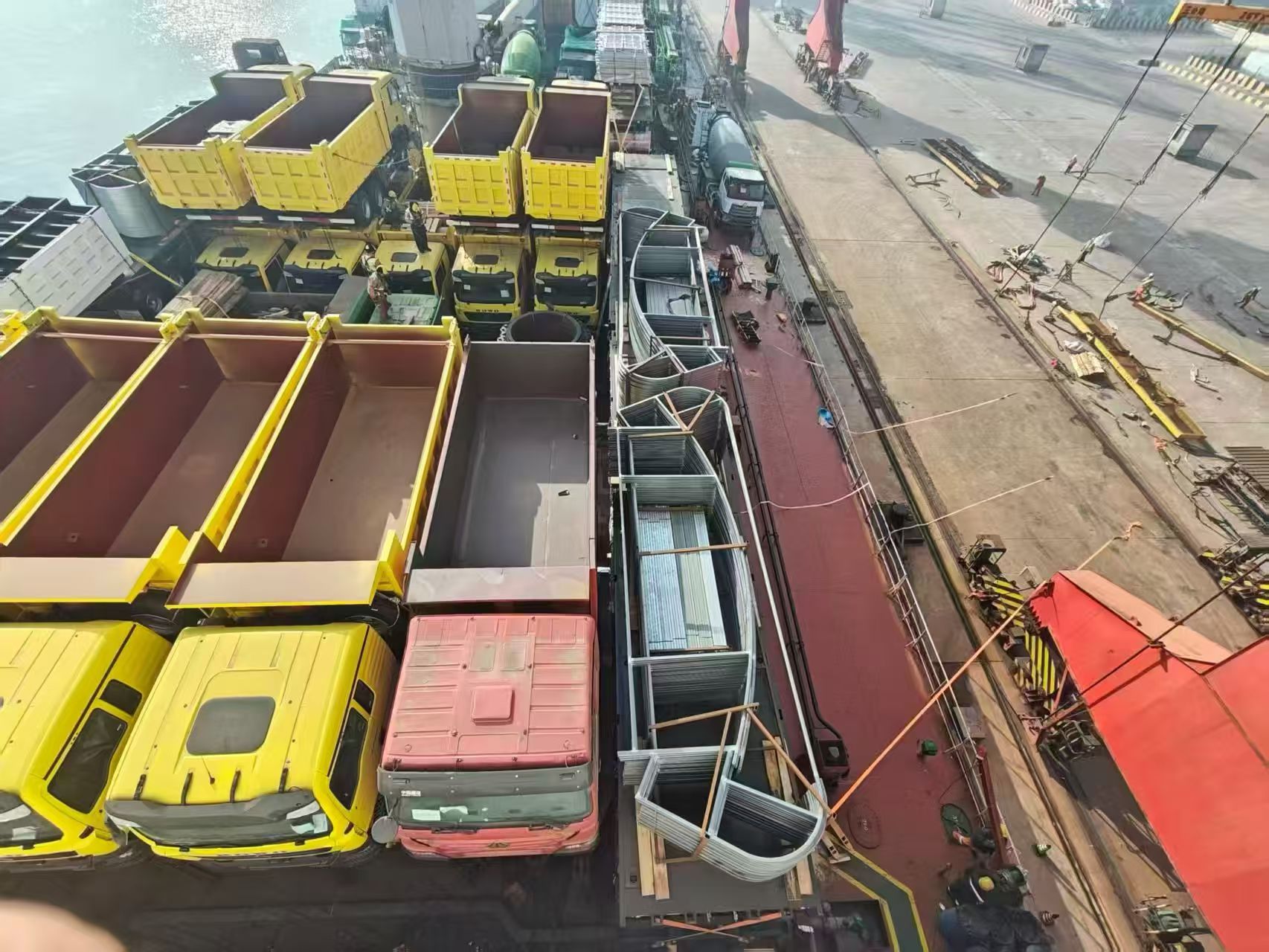
The continuous rise in freight rates has led to high transportation costs for customers, and even international trade cannot be concluded due to transportation issues. In addition to the increase in basic shipping costs, the market also generally charges peak season surcharges, fuel surcharges, etc., resulting in a significant increase in logistics costs for enterprises.