
Why is the price difference between international air freight in Europe, America, and Southeast Asia so large?
Comparing the international air freight market quotations in 2026, it is not difficult to find that for ordinary goods of the same weight, the price per kilogram on European and American routes is almost 1.5-2 times that of Southeast Asian routes. The huge price difference has made many sellers wonder, what is the root cause of the price difference for air freight? The price difference is determined by five dimensions: transportation capacity, route distance, customs clearance cost, market demand, and surcharges. This article breaks down the logic of price difference formation one by one.
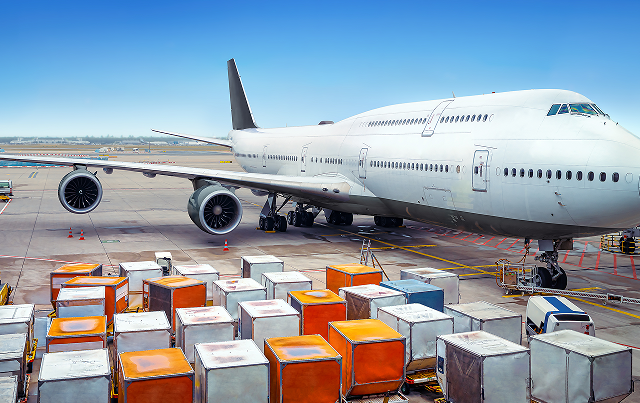
Firstly, there is a significant gap between flight distance and fuel cost. The Southeast Asian route has a short range, with domestic flights to Vietnam and Thailand taking only 2-4 hours and flights to Japan and South Korea taking 1-3 hours; The flight duration of long-distance routes between China and the United States, as well as China and Europe, is 12-16 hours, and the fuel consumption is 3-5 times that of short haul routes. As mentioned earlier, the fuel surcharge for European and American routes is 8-15 yuan/kg, while for Southeast Asia it is only 3-8 yuan/kg. The price difference per kilogram for fuel alone is more than 5 yuan. The basic trunk freight cost for long-distance routes is also much higher than that for short haul routes, naturally widening the gap in basic freight rates.
Secondly, the supply-demand relationship is completely opposite, with the price difference between peak and off peak seasons amplifying the overall price difference. Southeast Asia has dense global air routes, with dozens of domestic flights to Southeast Asia per day consisting of belly cargo and all cargo planes. There is an oversupply of capacity throughout the year, and cargo volume remains stable without explosive growth. The market competition is fierce, and freight forwarders actively lower unit prices to attract customers; The cross-border e-commerce cargo volume on European and American routes is concentrated, with a short-term surge of 40% in cargo volume during the Black Friday and Christmas stocking seasons. The cargo space in the belly compartment of passenger planes is limited, and the supply of all cargo planes is insufficient, resulting in a shortage of cabin space. Airlines have significantly increased their basic freight rates, adding a peak season surcharge of 3-8 yuan/kg, and the price difference during peak season has doubled directly.
Thirdly, there is a cost difference between ground operations and customs clearance. The customs inspection in Europe and America is strict, the customs declaration and compliance review process is complex, the labor and warehousing costs of the double clearance channel are high, and the THC, customs clearance fees, and delivery fees at the destination port are generally high; Southeast Asian countries have relaxed customs clearance, mature and inexpensive local delivery networks, and ground terminal surcharges are only half of those in Europe and America. At the same time, large airports in Europe and America are congested all year round, and temporary congestion surcharges are imposed. Southeast Asian airports have high circulation efficiency and no additional congestion premiums.
Fourthly, the structure of goods and the additional cost of shipping routes are different. The European and American routes mainly focus on cross-border e-commerce FBA large cargo, with a large single ticket volume and limited bargaining space for airlines; Southeast Asia offers a wide range of small commodities and sample items, with intense competition in channels and low-priced procurement. There are many connecting flights in the Middle East and Europe, which incur secondary handling fees. Southeast Asia is basically all direct flights, with no additional transfer costs.
Fifth, there is a gap in exchange rates and overseas labor costs. The local labor, warehousing, and transportation costs in Europe and America are much higher than those in Southeast Asian countries, and the final delivery and warehousing demurrage fees have simultaneously increased the comprehensive freight rate; Southeast Asia has low labor costs and extremely low terminal logistics expenses.
Suggestions for selecting shipments based on price differences: prioritize air freight to Southeast Asia for small sample items and low value small commodities; For high timeliness, high value of goods, and replenishment in European and American warehouses, only European and American air freight can be selected. The cost difference can be reduced by whole board packaging and centralized bulk shipment; Non time limited essential goods, combined with sea freight distribution for European and American orders, to balance logistics expenses.