
For containerized air freight and bulk cargo booking, which mode has a stronger ability to resist warehouse congestion during peak seasons?
During Black Friday, Christmas, and major overseas e-commerce promotions in China, international air freight experiences a widespread backlog of shipments, congested flights, and cargo accumulation as a common occurrence. The mainstream booking methods for air freight include block air freight and bulk cargo booking. Many new exporters fail to distinguish the advantages and disadvantages of these two methods and blindly choose the cheaper bulk cargo, resulting in long-term cargo delays. From the perspective of peak season anti-backlog, stability, and priority, block air freight has a much stronger overall anti-backlog capability compared to bulk cargo booking. The underlying operation logic of these two modes determines the completely different situations during the peak season.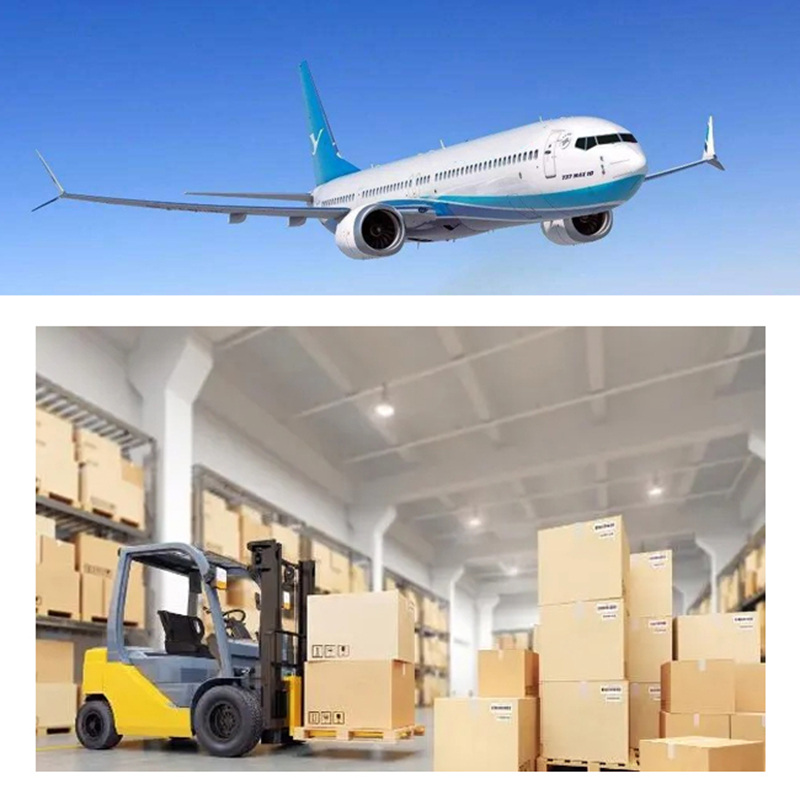
Block air freight, also known as freight forwarding companies or large logistics enterprises, sign long-term contracts with airlines, purchasing fixed blocks of flights on a weekly or daily basis for a certain route, regardless of the volume of goods, and paying the block fee on time. The contract has legal binding force, and airlines cannot arbitrarily divert or reduce the sold blocks of space. During the peak backlog period, all the bulk cargo queues up frantically for loading, and airlines prioritize the loading of block air freight first. Only after the sorting and storage of block air freight is completed, will the remaining empty spaces be allocated to scattered cargo. Block air freight has an exclusive sorting area and priority security channels, and will not be mixed and queued with a large amount of scattered cargo during the airport congestion stage. During the peak season, the timeliness of block air freight is almost not significantly affected. However, the disadvantage is that the initial cost of block air freight is fixed, and even if the volume of goods is insufficient, the full payment must be made. The unit price during the off-season is relatively high.
Bulk cargo booking is when the shipper individually reserves the remaining empty spaces on the flight. The cargo space does not have contract guarantees and is merely a verbal or simple reservation. The bulk cargo space belongs to the remaining corners of the flight, with the lowest priority. During the peak season with a sudden increase in cargo volume, the supply of cargo space cannot meet the demand, and airlines will prioritize squeezing out the bulk cargo space, constantly postponing the loading time of bulk cargo. In case of aircraft model changes or priority urgent shipments occupying space, the first batch of goods to be removed from the flight will always be bulk cargo. The price of bulk cargo is flexible, and during the off-season, it has extremely high cost-effectiveness. However, once it enters the backlog period, the probability of delays and loss of goods will multiply, and the stability is completely unguaranteed.
Let's further compare different scenarios: short-term sporadic small shipments, emergency replenishment during the peak season, block air freight has an overwhelming advantage over bulk cargo; for large-scale, long-term, and stable shipments, fixed block air freight can lock in the timeliness throughout the year; for temporary and sudden small shipments without prior planning, one can only passively choose bulk cargo and accept the risk of delay. There is also a semi-blocked mode on the market, which compromises the costs of both and has a stability between full block and bulk cargo.
Of course, block air freight is not absolutely perfect. Poor small freight forwarders resell block air freight space, splitting one block of space and selling it to dozens of customers, still causing congestion. Only a formal block air freight directly signed with the airline can fully leverage the anti-backlog advantage. In summary, during the off-season, bulk cargo is cost-effective, and during the peak season, priority should be given to the one-hand block air freight channel; for pre-shipment preparation, lock in the block air freight space in advance, do not be tempted by the low price of bulk cargo, stable and punctual timeliness is far more important than a small difference in freight charges.