
How many cubic meters can be loaded by international sea freight of 20GP, 40GP, 40HQ?
Friends who engage in foreign trade and cross-border e-commerce have probably been tormented by this problem:
Should I order this shipment for 20GP or 40HQ
Ask the freight forwarder, and they say 'it depends on your cargo volume'; Ask a colleague, and they say, 'Can you calculate CBM?'; I grabbed my calculator and pressed it hard, but after pressing it, I became even more confused - because the numbers found online were becoming more and more mysterious. Some people say that a 20GP can hold 33 cubic meters, some say 28 cubic meters, and there are still people who softly say, 'I can hold 25 cubic meters and it's full.'.
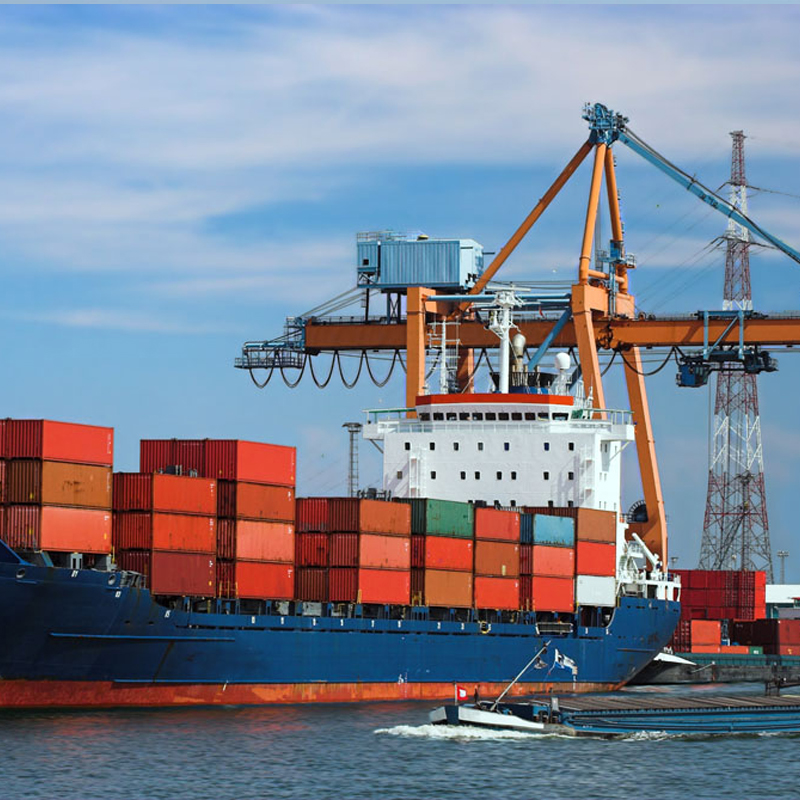
Cabinet: In theory, I can hold it well, but in reality... well, it depends on fate.
Today we will talk about this matter in detail: how many cubic meters can be installed in 20GP, 40GP, and 40HQ?
There are two "square numbers" for containers, don't confuse them
The "square" of a container has two sets of numbers: theoretical capacity and actual capacity. Theoretical capacity is calculated by measuring the length, width, and height of the box with a ruler, and it can never reach 100% during actual loading - there are gaps between the cardboard box and the cabinet wall, pallets take up space, and there is still room for opening the door when the goods are stacked to the top. The circle around the cabinet door is not free.
So what really has reference value in the industry is the normal installation volume, not the theoretical value.
List of Three Brothers' 'True Meals
The following are standard data commonly used in the industry. There may be slight fluctuations among different shipping companies and container conditions, but the overall direction cannot be avoided:
20GP (20 foot container)
The internal dimensions are approximately 5.90 × 2.35 × 2.39 meters.
The theoretical volume is about 33CBM, and it can normally hold about 28 cubic meters.
It is the "little steel cannon" in the container industry: it is not large in size, but has an online carrying capacity, with a common weight limit of 21-22 tons, suitable for high-density goods such as mechanical parts, steel, tiles, and hardware. For heavy goods, let's first look at 20GP, there's no problem.
40GP (40 foot general cabinet)
The internal dimensions are approximately 12.03 × 2.35 × 2.39 meters.
The theoretical volume is about 67CBM, and it can normally hold about 58 cubic meters.
The length doubles, but the height is the same as 20GP, so it is a 'flat and long athlete'. The volume is nearly twice that of 20GP, but the load capacity has not increased much, making it suitable for goods with large volume but not so heavy, such as furniture, building materials, and ordinary daily necessities.
40HQ (40 foot high cabinet)
The internal dimensions are approximately 12.03 × 2.35 × 2.69 meters.
The theoretical volume is about 76CBM, and it can normally hold about 68 cubic meters.
It is only about 30 centimeters higher than 40GP, but the theoretical volume is about 9CBM more, which can actually accommodate about 10% more foam goods. The "heaven's choice cabinet" for soaking goods and light throwing goods - textiles, plastic products, and daily necessities with loose packaging - is right to go to 40HQ.
However, please note that the weight limit of 40HQ is similar to that of 40GP, and heavy goods will not be overloaded just because they are high. Should they be overweight or not.
20GP for weight, 40GP for length, 40HQ for foam goods. When unsure, first ask yourself: Is my goods "heavy enough to hold hands" or "large enough to take up space"? The answer is basically out.
Why can't the square numbers you calculated fit in forever?
Because you are doing math and packing is physics.
The size of the cardboard box cannot be exactly divided by the length, width, and height inside the cabinet. It should be arranged in a row along the length of the cabinet, with only a few tens of centimeters left at the tail that cannot fit into the entire box; As soon as the tray is placed, the gaps between the trays eat up several squares; The goods are piled up on the top of the cabinet, and there must be space left in the last row for opening the door and unloading. In the industry, the loading rate is used to measure this matter. If the foam goods can reach 85% -90%, it is considered excellent. For heavy goods or irregularly packaged goods, a loading rate of around 75% is also normal. So the theoretical volume should be discounted by 15% to 10%, which is the number you should take to book the container. Using the theoretical 76 square meters of 40HQ, calculate the number of boxes and find out that they are "exactly filled", and there is a high probability that they will not be fully loaded on site.
The sea freight has been calculated, what next?
Clear calculation of ocean freight accounts is a fundamental skill. But friends who work in the US market understand that not every shipment can be 'waited for'. During peak season, cabin availability is tight, shipping schedules are fluctuating, and customs clearance is slow. The goods are floating at sea, and the inventory on the listing will not wait for you.
So the truly mature shipping rhythm often involves sea freight as a foundation and air freight as a supplement. The cost of bulk goods passing through the container stall, emergency restocking, out of stock rescue, and high value small batch empty delivery to compete for timeliness.
When it comes to American air freight, Baiyun.com '"American air freight" product has figured out the word "stability": self operated VIP cabins are locked in three major hubs - LAX (Los Angeles), ORD (Chicago), JFK (New York), with nearby flights and local customs clearance in the eastern, central, and western regions, and the route time is much shorter than the traditional mode. In terms of delivery time, the fastest withdrawal is within 4 working days, with delay compensation: if the withdrawal is not made within the time limit, a compensation of ¥ 1/KG/day will be charged, with a maximum of ¥ 10/KG.
The regret of not being able to load the container by sea, air freight will help you save time.