Shipping from China to Kuwait by sea
Sea freight costs are generally calculated per container (FCL) or per cubic meter (CBM) for LCL.
Shipping from China to Kuwait: A Comprehensive Guide to Sea Freight
The trade relationship between China and Kuwait has grown significantly over the years. In 2025, bilateral trade reached USD 18.58 billion, a year-on-year increase of 14%, with China maintaining its position as Kuwait's largest trading partner for 11 consecutive years. Sea freight remains the backbone of this trade, offering the most cost-effective solution for transporting the bulk goods, machinery, vehicles, and project materials that drive this commercial exchange.
Why Choose Sea Freight?
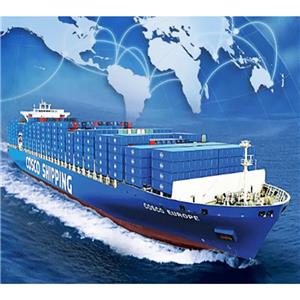
Sea freight is the dominant mode of transport for the China-Kuwait trade route due to its cost-effectiveness for large volumes and ability to handle diverse cargo types. It is the preferred method for importing furniture, building materials, industrial machinery, auto parts, and wholesale consumer goods.
While air freight can deliver goods in 3–7 days, sea freight takes longer but is substantially cheaper-8. For businesses moving heavy or bulky goods where speed is not the primary concern, ocean shipping is the logical choice.
Key Shipping Routes and Ports
Major Ports of Origin in China
Goods typically depart from China's primary commercial hubs, including:
Shanghai and Ningbo (East China)
Shenzhen and Guangzhou (South China)
Qingdao, Tianjin, and Xiamen (Northern and Southern coasts)
Tianjin and Shanghai serve as the main loading ports for regular break-bulk services, with flexibility to add calls at Jingtang (Hebei) and Bayuquan (Liaoning) to serve northern exporters.
Major Ports of Arrival in Kuwait
Cargo is primarily discharged at Kuwait's two core commercial ports:
Shuwaikh Port is Kuwait's largest commercial port. Located within Kuwait Bay in the capital, it handles the majority of the country's ocean-going merchant trade. It features 21 berths, including 14 ocean-going berths with depths reaching 10 meters. Its facilities include significant warehouse space (174,000 sqm) and container yard space (260,000 sqm)-.
Shuaiba Port, situated on Kuwait's eastern coast, serves the country's industrial zone. It has 20 commercial and container berths with depths ranging from 10 to 14 meters. The port also features six container berths with a quay length of 1,330 meters, making it well-suited for industrial and bulk cargo.
Sea Freight Options and Transit Times
Full Container Load (FCL)
FCL is suitable when you have enough cargo to fill an entire container. Common options include 20GP, 40GP, and 40HQ containers-6. This method offers better cargo protection, faster port handling, and lower risk of cargo mixing.
Typical transit time: 20–30 days
Less than Container Load (LCL)
LCL allows multiple shippers to share container space, making it a good option for small and medium-sized businesses or trial orders with low-volume shipments
Typical transit time: 25–35 days due to additional consolidation and deconsolidation handling
The sailing route from northern Chinese ports typically takes vessels through the South China Sea, the Strait of Malacca, the Indian Ocean, and the Strait of Hormuz into the Persian Gulf. The sailing time from Tianjin to Kuwait City is around 25 days, while from Shanghai it is slightly shorter at about 18–22 day