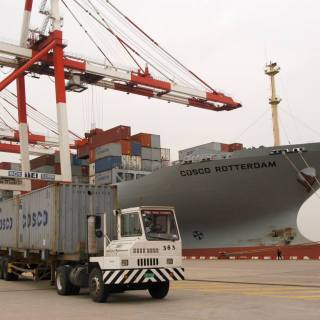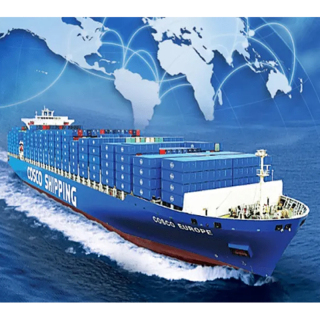
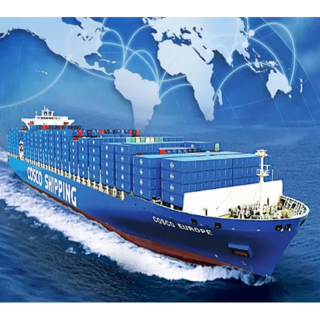
from China to New Zealand by Sea Freight LCL
For importers moving cargo volumes that don't justify a full container, Less than Container Load (LCL) shipping offers the flexibility and cost-efficiency needed to get goods from China to New Zealand without paying for unused space
What Is LCL Shipping?
LCL, or Less than Container Load, consolidates cargo from multiple shippers into a single container. You pay only for the volume or weight your goods occupy, making it ideal for small-to-medium restocking, sample orders, trial runs, and personal effects shipments-
. The typical sweet spot for LCL is 1 to 14 cubic meters. Once your cargo exceeds 15 m³, Full Container Load (FCL) becomes more economical on a per-unit basis.
Transit Times
Because LCL shipments require consolidation at origin and deconsolidation at the destination port, transit time runs 3 to 7 days longer than FCL. Realistic door-to-door windows for LCL from China to New Zealand generally fall between 28 and 40 days, depending on the origin and destination ports involved.
Key port combinations include:
Shanghai to Auckland: Direct services available, port-to-port around 21 days
Guangzhou/Shenzhen to Auckland: Approximately 18–22 days sailing, 25–35 days door-to-door
Christchurch/Wellington: Typically routed via Auckland, 30–40 days door-to-door
Actual transit times are subject to port congestion, customs inspections, and peak-season pressures around Chinese New Year and Christmas. A 7–10 day buffer is advisable for planning purposes-
.
Cost Structure
LCL pricing can appear opaque because the total cost comprises multiple line items spread across both ends of the journey. A transparent quotation should itemize the following:
Origin charges (China side):
Factory-to-warehouse trucking
Warehouse receiving and handling (per CBM or pallet)
Consolidation and container loading
Export customs clearance and documentation
Bill of lading fee
Ocean freight:
Sea freight rate (per CBM or per tonne, whichever is greater — the standard W/M rule)
Bunker adjustment factor (BAF) if applicable
Peak season surcharge (seasonal)
Destination charges (New Zealand side):
Port service charges and terminal handling
Devanning (unloading the consolidated container)
Customs clearance and MPI documentation
Biosecurity inspection fees (if MPI inspects)
Local trucking to final delivery address
Government charges:
GST: 15% on the sum of CIF value plus duty
Customs duty: Under the China–New Zealand Free Trade Agreement, most goods of Chinese origin qualify for zero-duty treatment when accompanied by a valid Certificate of Origin
Market data suggests LCL base ocean freight rates from China to New Zealand run roughly NZD 200–350 per cubic meter, though this figure typically covers only the main carriage and excludes origin and destination charges.
New Zealand-Specific Compliance Requirements
New Zealand's border is jointly regulated by the New Zealand Customs Service and the Ministry for Primary Industries (MPI). The compliance landscape is strict, and preparation at origin is the single most effective way to avoid costly delays.
MPI Biosecurity: The ISPM 15 Rule
Wood packaging is the most common cause of held shipments on this lane. Every wooden pallet, crate, or dunnage piece must comply with ISPM 15 — the international standard requiring heat treatment or fumigation, with the treatment certified by an IPPC stamp visible on the wood. "The supplier said it was fine" is not a defence MPI accepts. Non-compliant wood packaging faces fumigation, return to origin, or destruction at the importer's expense, with associated costs easily reaching NZD 300–1,000+ and adding 5–10 working days to the clearance timeline.
Wood packaging made from processed materials — plywood, MDF, particle board — is generally exempt from ISPM 15 requirements because the manufacturing process eliminates pest risk. If your supplier uses any solid wood, verify the IPPC stamp before the container seals.
Customs Documentation
Required documents for commercial imports valued over NZD 1,000 include:
Commercial invoice with HS codes and Incoterms
Packing list (packages, net/gross weights, dimensions)
Bill of Lading
Customs Client Code (NZCS 224) — mandatory for commercial entries, and the shipment cannot be cleared without it
Certificate of Origin (if claiming FTA duty-free treatment)
Practical Strategies for LCL Importers
Consolidate multiple suppliers before export. Routing goods from several factories through a single consolidation warehouse in China and shipping one consolidated LCL load costs far less than three separate small shipments. It also simplifies customs clearance — one entry instead of multiple.
Optimize packaging at the source. Since LCL is charged by volume, cartons that are unnecessarily oversized directly inflate your freight cost. Standard pallets (1.2m × 1.0m) stacked neatly are the most efficient format for consolidation.
Budget for GST regardless of duty status. Zero duty under the China–NZ FTA does not mean zero cost. The 15% GST applies to the CIF value plus any duty, and it is assessed on every commercial shipment over NZD 1,000.
Prepare for MPI screening. Even compliant shipments may be selected for biosecurity inspection. Having complete documentation — including supplier declarations for regulated product categories and visible ISPM 15 marks on all wood — accelerates the process if your goods are flagged.